Interview | Borscht Radio—on communal listening
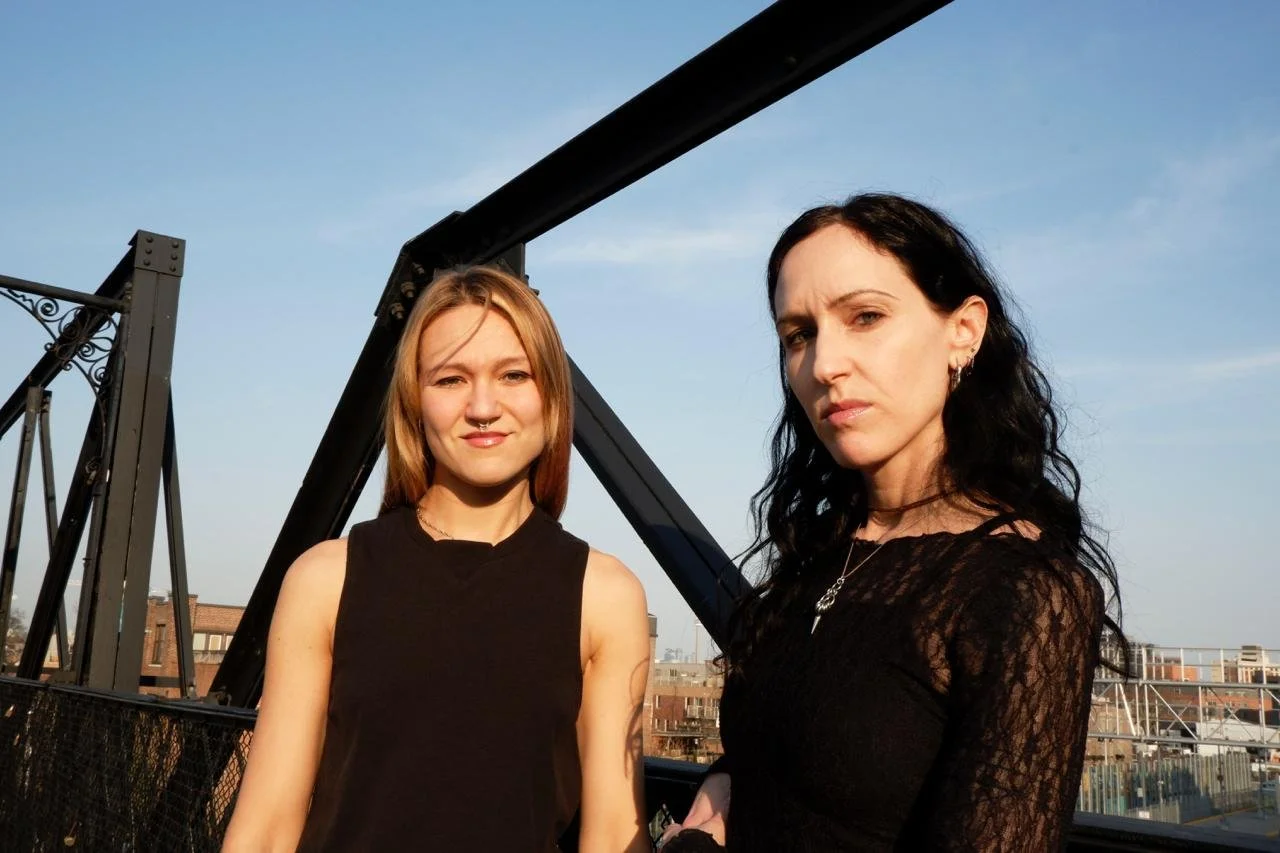
Dora(left) and Ilyse(right) of Borscht Radio photographed by Mark Emery
Introduction
We grew more familiar with Borscht Radio toward the end of 2024. Before that, the thread led to a curious chat with Dora about whales, animal communication, and listening through echoes: digital, more-than-human, and mythological echoes.
Fast forward to 2025, the Cultural Technologies Lab residency focused on translocal artists' collaboration and an ensuing gathering in Taiwan. Upon returning to Canada, we felt inspired and gained a new outlook on listening, community-building, and on how our local art scene can become more resilient by connecting with global networks.
Leaving an extractive content streaming platform (like the one that starts with an “s“ and ends with a “y”) is just a small step. Creating shared spaces online and offline to test new formats, discover interesting sounds, and develop ways for culture to circulate beyond the platforms we're given makes resistance tangible. Dora and Ilyse are building their own networks that connect different parts of Toronto’s experimental music scene.
Borscht Radio also curated a pilot episode of Local Disturbances to support UKAI’s exploration of the internet radio rabbit hole (or wishing well).
From Dora and Ilyse:
“You can find us wandering the streets, on the way to a More Noise Please! show or on some park bench scheming.
Our e-mail borschtrecords@gmail.com
We are always welcoming submissions!”
Borscht Radio:
https://www.instagram.com/borscht.live/
https://borschtrecords.bandcamp.com/
Where to find Dora:
https://gardenofmagic.bandcamp.com
https://soundcloud.com/garden-of-magic
https://www.instagram.com/dorraamusic
Where to find Ilyse:
https://www.instagram.com/xicada_/
Hello Dora and Ilyse.
To start, I’m curious about what’s been on your minds lately.
[Dora] I’m Dora. Lately, I’ve been interested in embodiment, bodies, having physical bodies, having embodied friends, and enjoying their company—hugs, talks... I think it was my natural response to the rise of AI—the more AI around I encounter, the more I want to embrace something that makes us all unique. Dance, theatre, voice, community, music, all that.
[Ilyse] I’m Ilyse and lately I’ve been interested in the moon, space, the complexity of human history, watching human history unfolding, how 2026 has felt so biblical and apocalyptic, how time feels like its speeding up, how hard it is to have the right opinion, the delicateness of existence, Tara (Buddhism), how communities and artist communities in particular can find more resilience.
[Dora] Oh yes, the latest shifts make me feel how important it is to build and nourish the community and people around you. I think we have a better chance of surviving if we all hold hands with each other.
What are you working on right now?
[Dora] Musically, I am working on a few projects: some music for my solo project, Dorraa—I am writing new material, inspired by my tour and residency in Taiwan. It’s about hidden layers of perception, little spirits. It’s called “Other Powers”.
This year, I decided to connect to more local labels. I am preparing a release on a Vancouver label Turbo AV—2 tracks where I explore Slavic mythology. Another release is coming on Imaginary North.
I am also writing some new music with my band, bikebike. We just played Wavelength festival, and it was an amazing experience. Also, I am developing something that links generative visual art and music, some system that reacts to live playing.
[Ilyse] I just finished an album that will be released in September, and now I am working on writing, I think, four grants to try to fund some musical projects. I am working on a show in May for an artist from Western Massachusetts, featuring a bunch of sweet locals, including my new-ish band, Hysteria. I am also preparing sound material for a dance/video piece on freedom/resistance that I will be part of. Other than that, I’m working out some summer plans.
Super exciting! I love that both your projects have extended into this wide array of artistic disciplines, more than just sound, but somatic, mythological, generative narratives and so on. What are some common threads across these projects? How do you navigate collaborative creative processes?
[Dora] I am the common thread in all my projects (and I am the needle). I feel like my curiosity drives me, and I do things, and one thing leads to another, and sometimes I feel like I disappear into a flow of things I am doing.
As for my approach to collaboration, my favourite style is when everyone is doing what they want in the areas that they are responsible for, and there are almost no arguments over decisions. I think, in creative projects, it’s possible to find common ground where healthy constructive anarchy blooms.
[Ilyse] In collaboration, I really want to just step back and see what the other has to offer without influencing it. If I want to work with someone, it means I trust them and their vision, and I want their particular shade of gem to shine. I love the idea of different art mediums interacting with each other more. I am very synesthetic, coming originally from a visual arts and writing background, so music has always been very visual for me. Good art is like a big bowl of borscht, whatever ingredients you have that can work together to create something new and nourishing
What are the sounds that are representative of a place or a community? How do you listen?
[Dora] I think, when you are inside the community, you don’t really see it; it’s dynamic, it evolves, and when you are in it, you might think that there are no boundaries, or they are blurred. But once you go somewhere and get to a community, you might notice some patterns. I remember when I first moved to Toronto, I felt like there was a certain tonality to music here, it’s a bit “suspended”, dissonants are embraced, and I remembered that, but now I don’t think about it that much.
I definitely noticed some characteristic sounds in Taiwan. Ilyse and I got so lucky to be immersed in the experimental noise/electronic scene, and I noticed a certain spiritual quality to the sound, rhythms, and noise textures. Not harsh noise, not noise for the sake of ego-expression—but something big, mighty, holy—at least, that’s how I see it. It definitely changed something inside me, and I learned a lot from it.
So for me, the sounds that are representative of a place or a community could be linked to the instruments people use or the choice of musical language—they reflect the surroundings, the overall vibe, weather, ambiance, and colours around.
How do I listen? Depending on how I feel or where I am, but often I surrender, and the sound takes over me. I think music is very powerful. It can consume you fully. You are immediately in it. There are always inner references and past experiences that new music interacts with. Also, I am a trained musician, so from time to time I catch myself analyzing—recognizing certain scales or patterns—but I try to let that go and return to an intuitive way of listening.
[Ilyse] The other day, I was standing outside The Baby G with some friends, and a garbage truck came by, and we imagined it as a super sick noise set! I recorded a sample of it.
I think it's the little things like that, the particular quirks of the sound of the subway, the many languages you hear walking down the street, the bird song in the morning. But then it's also the niche waves of musical scenes that seem to sweep through a time and place. When I think of the sound of Toronto in 2005, it's very different from what I think of Toronto in 2026.
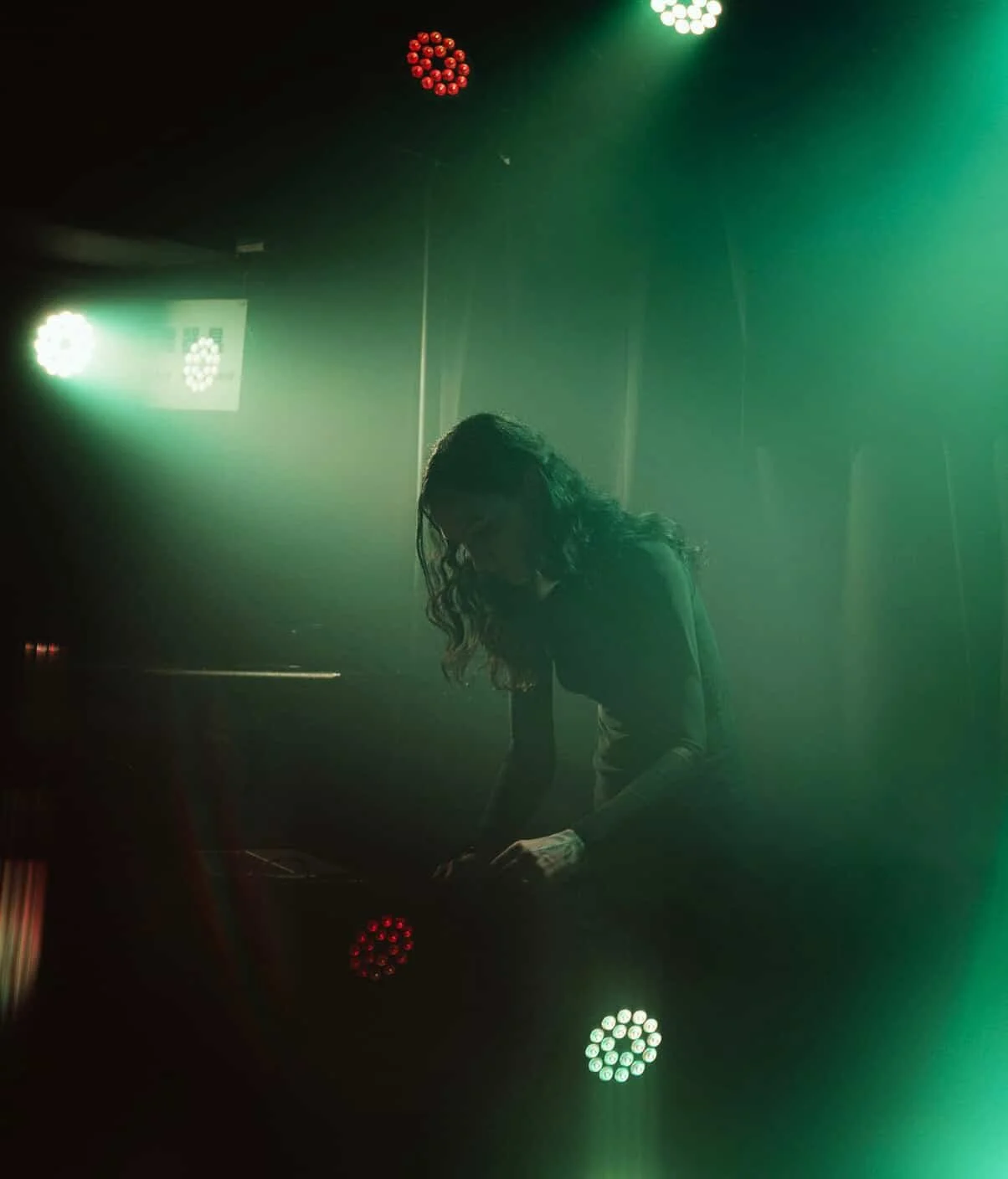
Ilyse—you may know her as Xicada, or in the band Hysteria
You are the organizers of Borscht Radio—what are some things that you have learned from the process of starting an internet radio?
[Dora] First of all, I realized how many great musicians are around. The Toronto music scene is amazing. We are not bound to any genre, but looking for a certain quality — we describe it as “raw, cutting edge experimental music”. Something that nourishes the soul and mind, something with a spark.
I also learned that it’s important to organize offline events, concerts. Borscht Radio is a music hub, and the ultimate goal is to create a space for people to meet each other through music, to collaborate, go see each other play, become friends, and create something beautiful.
Another thing is that a lot of people with great music don’t send their tracks because they feel like “it’s not enough.” But I think it’s really important to show your work to others. For a radio platform, it doesn’t have to be perfect — what matters is the emotion, the intention, the message, the vibe. Something you would send to a friend. In a way, we are all internet friends on Borscht Radio. Also, very practically, a lot of people don’t tag their tracks properly, and sometimes I receive something amazing and don’t know who made it. So please, always name your files: [artist – track title].
[Ilyse] I noticed how excited people are to have a place for their music, to be asked to send their tracks, to be included in something. Having a home for your art and not just feeling like when it's done, it's then sent off to the void to never be heard by anyone, and I think internet radio is great at building community.
I also realized how difficult it can be to build up something new, to direct people's engagement away from other flashier things. Also, filling up airtime and scheduling are pretty demanding. I learned it really needs to be an effort out of love.
[Dora] Oh, yes, re: filling up air time – I realized that air time is somewhat infinite, and there is so much space for music. We started regularly airing local artists – DJ sets, live sets. We are always welcoming submissions from artists – tracks and mixes. Thinking of expanding it to interviews, talks, and podcasts. So if you have something in mind, please reach out :)
“always name your files: [artist – track title].”
We went to Taiwan to prototype a translocal artists’ network, and you met many talented Taiwanese artists during the trip. What are some of the highlights? How have your practices shifted? What were your expectations, and what changed?
[Ilyse] I was so impressed by the music scene in Taiwan, and it really made me realize how there are musical worlds going on out there that we have no idea about in our little North American Toronto bubble. It changed the way I heard and thought about noise music and sound design. I was really struck by this certain element of sophistication, intentionality, and command of space in the compositions.
I really didn’t have many expectations because I knew that I knew next to nothing. But I am very inspired by the scene there. Meeting Luhung (music artist Y.F Tamashi and promoter who put on two of our shows in Taiwan) and having her be our eyes into the scene in Taipei was a massive boon, and I am sure we will carry on a friendship and collaboration long-term.
[Dora] It’s hard to choose what the highlights were. Getting to know local artists definitely changed me, and, like with some deep changes, I don’t even remember what was before—I feel like everything has always been the way it is now. Meeting Luhung was definitely a highlight, hearing Sundialll too, hearing a track written by my internet friend Shai FM on a dance floor in Taipei was interesting, too—music can travel so far. Playing shows for different audiences—the listening practices there are amazing, people are so attentive.
Musical language is very different and interesting in Taiwan.
I wrote some new music there, just opened Ableton on a train and started writing — and it became the beginning to my (hopefully) bigger project Other Powers. The main thing that I learned is a sense of space—the sense of space that musicians in Taiwan mastered so well. I am trying to bring it to my new music. The air in Taipei was so smooth, silky, humid, when we were there, and everything felt so calm and vast, that physical space reflected in music, and I want to work more with it.
Also, I experienced a long, 29 sec, earthquake in Taipei—it was 6.7. I never experienced anything like that before. Mighty power of earth, I feel like I want to embrace this big power in my music.
Interesting that you are asking about my expectations—I did write some tracks in Toronto called “dolphin shine”. I was going for an oceanic, indigo-blue, bright and airy vibe—like anime or low-bit computer games from the ’90s—fast and minimalist. That was all I was expecting to feel in Taipei, but it was nothing like that. Instead, it was amazingly calm, even though Taipei is such a big city. The energy is different, so grounding, I want to come back one day.
Calm is not exactly what I take from Taiwan, haha. I do agree that despite the constant movement, the energy is not rushed. Even in the Taipei metro during rush hour, there’s a rhythm that feels very different from the franticness of, say, Union Station at 5 pm. I noticed that this aligns with a broad, overly generalized “personality” of everyone I’ve met in Taiwan. They are mostly unfazed by chaos and somehow navigate it calmly. That’s probably the “calm” you are referring to.
I also totally sense the intentionality as Ilyse mentioned, not just in music, but also how people catch the movement of the city, being in the flow, or being carried by the shake of the earthquake, which must have been one of those visceral experiences—still listening but instead of the ear, the whole body. Are you two noticing any of these “sound practices” seeping into your ways of navigating life and things like friendship?
[Dora] Being shaken by the earthquake was just like being on a train! Except it wasn’t a train, the whole ground was shaking. I think the main thing—we were all together in the same sensation. There is the moment “I feel what you feel”, that connects one human to another. It's a bonding experience. It can definitely become the foundation of a friendship. I think similar magic happens with concerts, shows, and dance parties. It’s important to live through the same experiences together.
[Ilyse] I think that's a beautiful way, Dora put it. We live in such a fragmented world of echo chambers, so having shared experiences is so important for building friendships and community. When the media was more centralized, strangers could talk about the same TV show or song; now there are so many endless options, and all you can talk about with strangers is the weather.
Can you talk a little more about the soundscapes of daily rituals and how that shapes communal spaces?
[Ilyse] In my own daily rituals, I try to be very intentional about what soundscapes I allow around me. I've become a lot more particular about it lately. I love the concept of ragas in Indian music and how certain ragas are meant for specific times of day. I plan to make an ambient album of music meant for rooms, as background sounds for doing whatever one would be doing, more like a decoration on the wall than deep focused listening. Because I am very sensitive to how sounds can influence my mood, and sometimes I just want a nice sound bed to clean, cook, meditate, and read.
Unfortunately, when you leave the home, it's impossible to control what you hear, unless you subject yourself to living in headphones. I often think about how going into a store and hearing some annoying pop music with messed-up lyrics can really negatively affect me, and what that may be doing to people subconsciously.
[Dora] My own daily rituals, such as making coffee and taking a shower, are full of sounds, and if I am on a roll with my music creation, they all sound, for me, sometimes overwhelmingly beautiful and rhythmic—I hear melodies and rhythms. My partner Corey is a great musician and a very experienced cook, and he often cooks while listening to music. Pretty often, I can hear him chopping something in a distinct rhythm, locking in with the track that we listen to. Sometimes my cat meows, and I just can’t unhear that it’s a solid melody, and I start singing this song with him.
Sometimes a car would stop, and I often noticed a very gentle, breathy pad. When I hear the sound of a working mechanism, and based on the tones and harmonics it gives, I try to calculate the frequency of its rotation…
Ilyse mentioned the lyrics in songs—and I think it’s a common experience. I noticed that pop songs can often carry weird messages, imposing on people’s headspaces. But I am lucky so far, because I am able to tune out of the words so much (maybe because English is my second language). Songs often sound to me like a chipmunk talk—I hear the talking, but have no idea what it’s all about.
For the sound of communal spaces, the first thing that comes to my mind is singing that I heard in temples in Taiwan. Stores like Family Mart play a melody every time you walk in. On the subway, each line has its own little melody. I encountered melodies on the subway before—in Moscow, it was a descending major triad when the train arrived. I also noticed a gamelan-like melody on the subway in Okinawa — that made me think of the continuation of music and culture through land and beyond political borders. I remember hearing flute music on the subway in Caracas, Venezuela, in 2010, and becoming completely disoriented—especially given it’s such a vast system. Sometimes, for me, it’s hard to focus when I am immersed in sound.
In Taipei, we walked into an exhibition, and aside from all the beautiful modern art there, there was a gentle drone, electronic music, that was creating an atmosphere and prompting conversation. Silence can be uncomfortable, and a gentle soundtrack can invite socialization. I met Tai Mei there, and I wrote a Substack post about her and her art. Ilyse noticed that people don’t talk much on the streets.
That all definitely creates a background music, tone, drone, and ambiance that definitely affects what people do musically. Music can condition people into a certain mood. It also creates a shared experience—even if people don’t interact, they are moving through the same rhythms and signals together. That’s how a communal space starts to form.
Ah! Chipmunk voice—unrelated to pop music and lyrics. I know you were in scientific publishing before and had done research in animal communications. Sound plays a huge part in how different species communicate and “be” in the world, like whales, or I suppose chipmunks too. Words and lyrics came after, and they carry very unique symbolism, maybe only humans use as our main communication tool. How does that knowledge contribute to how you listen?
[Dora] I am actually very humble about my knowledge — new knowledge in science accumulates so fast, that whatever you think was true can be not true tomorrow. New articles about animal communication emerge from time to time, and I just don’t really know where to draw the line between animals and people. Right now, I am reading a book about memetics, a theory that says humans are impressively adapted to copy each other—copy ideas, ways of doing things, and so on. Scientifically, memetics is more of a theoretical/philosophical framework than a well-established empirical science.
A unit of repetition—the replicator—is called a “meme” (like an internet meme). People copy each other just because certain memes are better suited for copying, not because they are good. Using certain technology, or even the transition from hunting-gathering to farming, could be an example—not purely because it was optimal, but because it became widely adopted. Another perspective is that people tend to copy those associated with successful or dominant memes. I started looking at music in a similar way—noticing trends and memes, and trying to guess what stands behind them. For example, in music, you can track cultural influences—certain grooves, melodies, sounds.
I want to know more about how you curate your soundscapes. I live close to a highway and a bus stop, and that’s sort of the backdrop to my soundscape. In a poetic way, that’s sort of the sound of the city, a pulse maybe. Because you mentioned the sound of Toronto changing over the years, and also the noise music scene possessing a spiritual quality, as you observed in Taiwan, can you speak more about listening over a long timespan (decades in a city) and about noise as a discovery or a form of introspection?
[Ilyse] One cool thing about getting older is that you start to sense waves of trends more, and you can realize that something you were involved in in the past was also one of those crashing waves. Like when I first moved downtown in 2005, indie music was huge. I would go to Wavelength at Sneaky Dees every Sunday. You don’t really hear that kind of music anymore. Jungle was really big too. Not that it isn't now, but it's certainly not the main trend or what I think of when I think of the sound of Toronto today.
Noise music can be so good at allowing for discovery and introspection because there literally are no rules (other than maybe “no songs allowed!” lol) It really is the most free genre of sound.
What are some practices of listening, in our lives or social relationships, that people can start practicing?
[Dora] I think it would be wonderful to put some gentle drones in 3rd spaces—silence can be uncomfortable because it exposes talking and some other noises. Gentle drones in exhibition halls could be inviting for calm socialization and discussions. Also, in general, Toronto could use more 3rd spaces. Another thing that comes to mind is detaching music culture from drinking culture. More spaces focused on listening to music. More spaces that are similar to temples—would be wonderful to sing together and think about something bigger than us, humans, where everyone could just come for free, not to be bound to any specific religion – for example, in religious syncretism is common in Taiwan, temples unite people of multiple religions—they can be just divided by zones.
[Ilyse] When listening to complex electronic music, I like to really tune into one element of the music and feel into what it's doing. Like, maybe I’ll choose the snare and just really hear that snare and feel into how everything else is engaged with it, moving around it.
In social relationships, especially in difficult times, I think we could all use some better listening skills. Listening to what someone is saying, projecting yourself into their headspace to feel from their perspective, can really change one's defences.
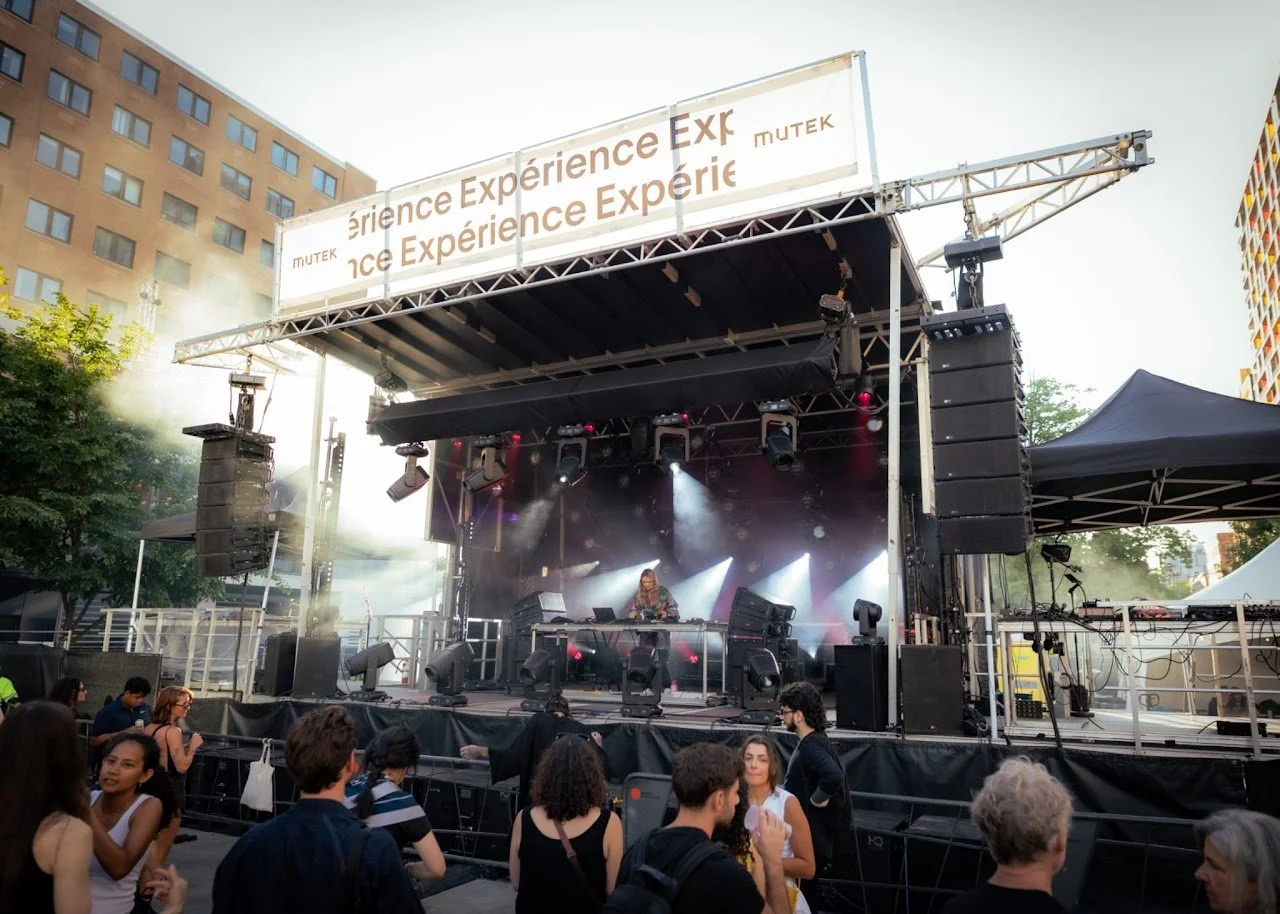
Dorraa (fka Garden of Magic) at MUTEK Montreal 2025
Thank you both for this conversation. You and Borscht have this relentless curiosity about what fellow musicians and sound artists are experimenting with. In a way, this is rare, as many platforms, especially those relying on music playlists, are motivated by playing music that feels safe and unchallenging. Share a word or two on how to become more open as a listener, as a person, and as part of the community.
[Dora] I think we all have our comfort zones, and it just so happens that I feel comfortable with a certain type of music. When I hear certain sounds, I feel deeply relaxed—almost like a burden lifts off. It feels like coming home.
When I was a teenager, listening to popular bands, I often wondered: how do people enjoy this? What do they find in it? What kind of headspace do I need to be in to feel the same excitement as everyone else? At that time, I was playing a lot of classical music and atonal 20th-century music, so my musical taste was very niche.
Over time, I realized that there is simply music that is easy for me to love. And maybe openness starts there—not by forcing yourself to like everything, but by paying attention to what you naturally connect with.
Maybe all I can say is: if you don’t feel like listening to music that surrounds you, and there is a niche music that you actually love, make your own radio playing only this kind of music, and you’ll probably have a lot of fun meeting a lot of people who make the type of music that you love, and that’s how community can form.
In a way, no matter how niche or “weird” your taste might feel, there are always others who share that sensitivity. And when you find them, you can build something together.
[Ilyse] It's hard to know how to tell a person how to be more open, as I think I've always been a very naturally curious person, so it's hard for me to imagine that state of mind. But maybe I'd suggest something around growing a sense of empathy. I think through a lens of empathy, we can hear things differently. If people are entirely focused on themselves, that's fine, but I imagine you may have a pretty lonely existence. As someone who grew up with intense social anxiety and was a total loner, finding community in the Toronto music scene has been the most life-changing thing to happen for me, so I would suggest to anyone looking for a community to widen their internal lenses.