
Saturday March 28, 2026 - 1pm-4pm
568 Richmond St. W, Toronto, Canada
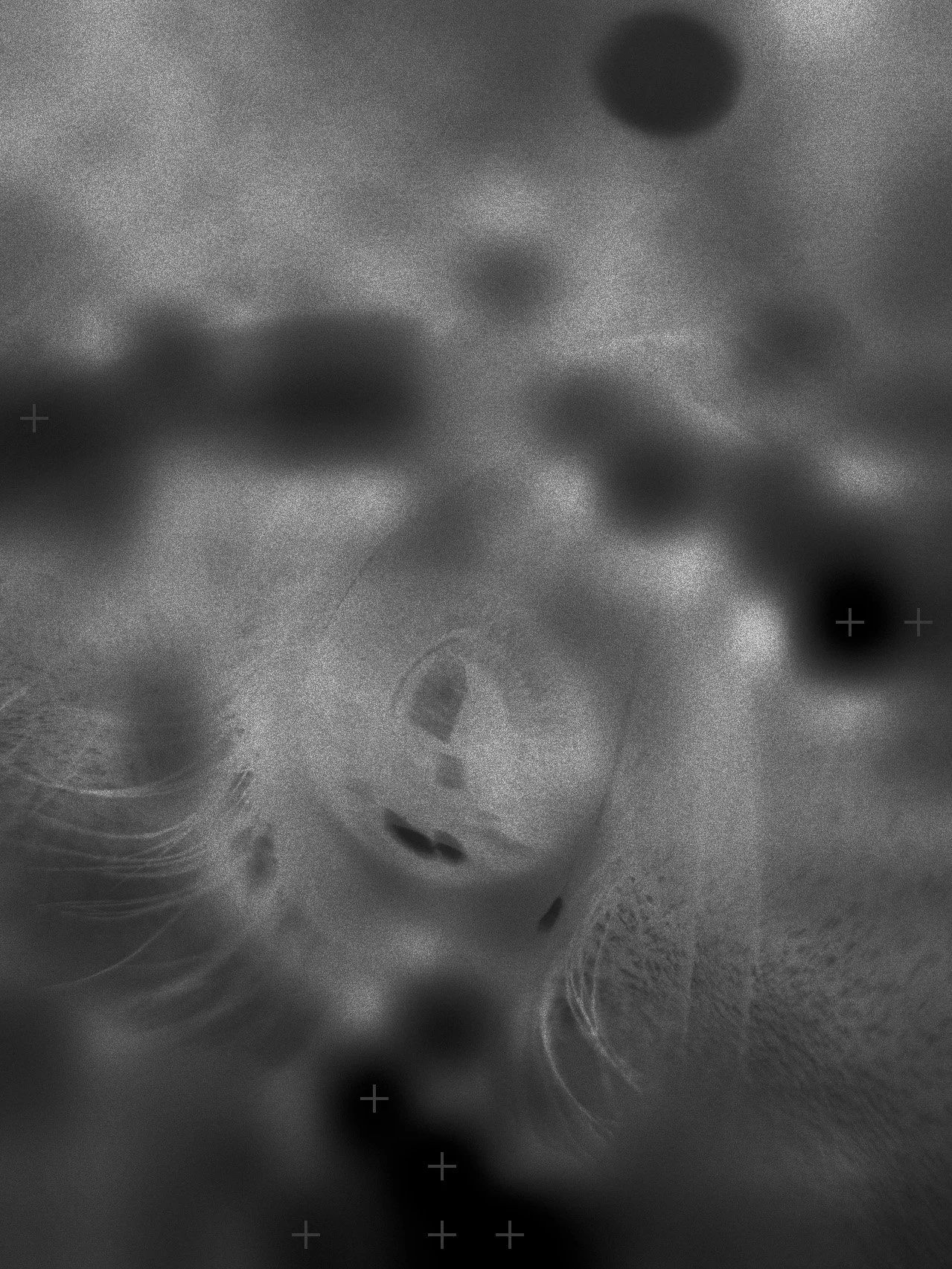
A workshop on computer perception: attention, models, and how algorithms understand our world.
We spend a lot of time being seen by machines — cameras, phones, algorithms sorting through images of us without us knowing. Most of us are left with only a vague sense that something is happening, and no real way to look back.
Views from the Machine is for cultural practitioners, educators, facilitators, and curious thinkers who want to move beyond abstract conversations about AI and into direct, embodied experience with how these systems actually work.
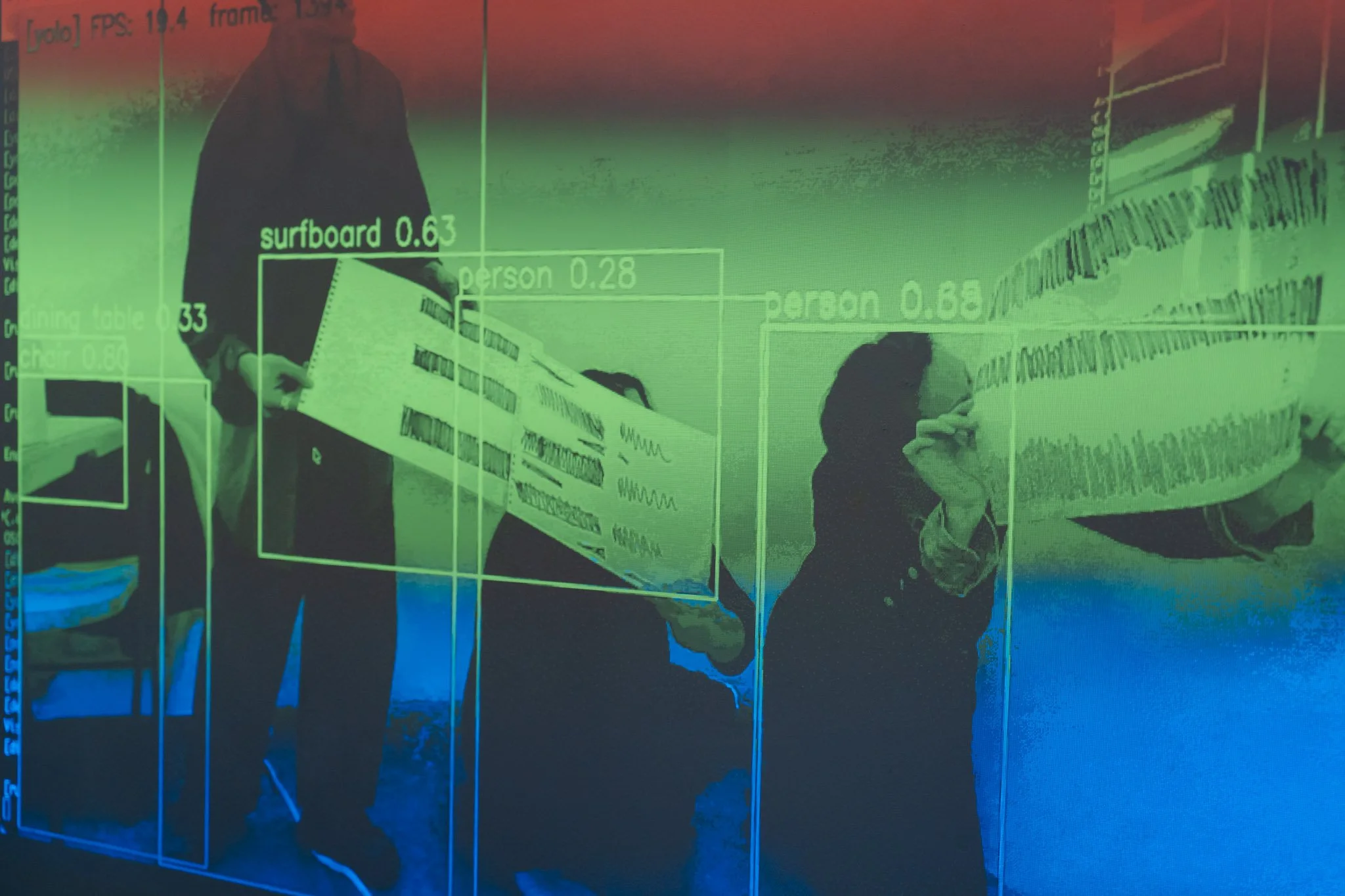
Through hands-on exercises in drawing, collaging, and making — and watching what various vision models pay attention to in real time — participants develop an intuitive, grounded understanding of computer perception that no explainer article can provide.
Over the course of the workshop, we invite participants to:
Experience firsthand how machine attention differs from human perception
Develop playful, low-stakes methods for demystifying algorithmic systems
Build confidence in explaining abstract technical concepts through tangible, embodied practice
Engage critically with AI outside the familiar frames of productivity, efficiency, or fear
Participants in Views from the Machine will walk away with:
Tangible facilitation methods for introducing algorithmic literacy to non-technical audiences
A personal framework for engaging critically and creatively with digital technologies
Clarity in articulating their own values and perspectives on algorithmic systems
A shared experience with a small community of people asking the same kinds of questions
No technical background required. No computers to bring. Just your hands, your attention, and your willingness to be a little surprised by what the machine finds interesting.
At a moment when Artificial Intelligence saturates every part of life: work, creativity, story, and identity, Call of the Void offers a deep cultural reframing to reorient how we relate to it.
Call of the Void is for thinkers, artists, cultural workers, and professionals who want to explore technology not as a tool to continue driving endless exploitation, but as a cultural force we inhabit and interrogate.
Over the 4 sessions, we invite participants to:
Surface assumptions about technology, nature, and culture
Explore how culture and technology shape each other
Develop personal frameworks for ecological storytelling
Cultivate sincerity, relationality, and generosity over efficiency and extraction
Participants in Call of the Void will work towards:
A clearer sense of their personal and cultural relationship with Artificial Intelligence
Tools to articulate critical perspectives on technology’s ecological and social impact
A framework for meaningful, non-instrumental engagement with complex systems
A community of peers exploring similar questions
Programs
July 2026 / New Stadium - Toronto, Canada
Most online collaboration still runs through platforms. Your work lives on someone else's server, your connection depends on their uptime, and the terms of your creative relationship are set by a company with different priorities than yours.
Digital Bridges teaches a different approach.
Over four weeks, a cohort of artists, creative technologists, and researchers learn to connect their tools directly to each other's systems — your data traveling between machines, not through a platform — and build a collaborative project using that connection. The program closes with a public showcase at New Stadium in Toronto.
What You'll Learn
The core skill is peer-to-peer networking using OSC (Open Sound Control), a communication protocol built into almost every major creative software platform: TouchDesigner, Max MSP, Ableton Live, Processing, p5.js, Unreal Engine, and beyond. Combined with Tailscale, a tool for creating direct encrypted connections between devices over the internet, OSC becomes a bridge for real-time data exchange between any two systems, anywhere, without routing through a third-party platform.
But beyond the technical setup, Digital Bridges asks you to think about designing a communication protocol as a creative act. What data do you share? What do you withhold? What does latency do to the work? These aren't just engineering questions, they're the same questions that shape any collaborative creative relationship.
By the end of the program you'll be able to link any two OSC-compatible systems in real time, across any distance.
Program Structure
Digital Bridges runs across four weeks in July, with one longer in-person session per week at New Stadium and one shorter online session per week. The online sessions aren't a concession to convenience. Demonstrating that meaningful collaboration happens across distance is part of what the program teaches.
Week 1 - Foundations: How Do We Connect? The first week is about setup, first contact, and community mapping. Participants establish working connections between their systems and begin identifying collaborators within the cohort. The week closes with a Creative Handshake exercise: design a simple interactive "hello" between your tools. Everyone leaves with a working connection and at least one collaborative relationship started.
Week 2 - Dialogue: Making Systems Talk Moving from a working connection to actual creative communication. A Distance Duet challenge pairs participants to build a synchronized audiovisual piece: one controls visuals, one controls audio, systems talk in real time. An online check-in surfaces what creative decisions emerged from the constraints of the technology.
Week 3 - Collaboration: Building Something Together Open-ended collaborative creation time with structured support. Participants define a project with their partner — a synchronized audiovisual piece, a shared interactive installation, a networked performance or data experience — and build it in a facilitated work session. A challenge prompt is available for those who want a more directed starting point.
Week 4 - Showcase and Future Visioning A closing in-person showcase of completed works, works in progress, and documented experiments. No minimum polish requirement. The goal is a specific moment to share and reflect, not a finished product standard. A structured closing discussion addresses building collaborative relationships and care networks that outlast the program.
Who It's For
Creative and technology professionals in organizational contexts looking for applied professional development with genuine technical depth. The program structure supports expense reimbursement, and outcomes — real-time systems fluency, protocol design thinking, cross-disciplinary collaboration practice — are directly transferable to professional work.
Researchers and science communicators working in public engagement, data visualization, or interactive outreach. The OSC and real-time data layer maps naturally onto sensor networks and data pipelines, reoriented toward experiential and public-facing output. Target institutions include science centres, museums, and university programs with public engagement requirements.
Artists and arts workers exploring new tools for collaborative practice, distance performance, or networked installation.
The cohort is deliberately mixed across these disciplines. The different problem-solving approaches participants bring to the same technical challenge is part of the program's value.
Prerequisites: Basic familiarity with at least one creative software platform. Comfort installing software and troubleshooting. No networking or programming experience required. Openness to technical experimentation essential.
What You Leave With
Working knowledge of Tailscale and OSC
The ability to connect any OSC-compatible creative or technical software in real time across distance
At least one completed or documented collaborative project
Participation in a public showcase event
An expanded professional network across art, technology, and science disciplines
Transferable skills: real-time systems thinking, protocol design, cross-disciplinary collaboration practice
Program Details
In-person sessions at New Stadium, 83 Walnut Ave, Toronto (6–9pm): July 1, July 8, July 22
Closing showcase at New Stadium (4:30–9:30pm): July 25
Online check-in sessions (1–2:15pm): July 4, 11, 18 - (6-7:15pm): July 15
Cohort size: 16 participants maximum
Participant requirements: A computer running Windows, macOS, or Linux with WiFi and a power adapter. Bring your digital creative tools, data, ideas, and an open mind.
The $750 tier is subsidized for self employed artists. If cost is a barrier, get in touch: immersive@ukaiprojects.com
Saturday March 28, 2026 - 1pm-4pm
568 Richmond St. W, Toronto, Canada
A workshop on computer perception: attention, models, and how algorithms understand our world.
We spend a lot of time being seen by machines — cameras, phones, algorithms sorting through images of us without us knowing. Most of us are left with only a vague sense that something is happening, and no real way to look back.
Views from the Machine is for cultural practitioners, educators, facilitators, and curious thinkers who want to move beyond abstract conversations about AI and into direct, embodied experience with how these systems actually work.
Through hands-on exercises in drawing, collaging, and making — and watching what various vision models pay attention to in real time — participants develop an intuitive, grounded understanding of computer perception that no explainer article can provide.
Over the course of the workshop, we invite participants to:
Experience firsthand how machine attention differs from human perception
Develop playful, low-stakes methods for demystifying algorithmic systems
Build confidence in explaining abstract technical concepts through tangible, embodied practice
Engage critically with AI outside the familiar frames of productivity, efficiency, or fear
Participants in Views from the Machine will walk away with:
Tangible facilitation methods for introducing algorithmic literacy to non-technical audiences
A personal framework for engaging critically and creatively with digital technologies
Clarity in articulating their own values and perspectives on algorithmic systems
A shared experience with a small community of people asking the same kinds of questions
No technical background required. No computers to bring. Just your hands, your attention, and your willingness to be a little surprised by what the machine finds interesting.
At a moment when Artificial Intelligence saturates every part of life: work, creativity, story, and identity, Call of the Void offers a deep cultural reframing to reorient how we relate to it.
Call of the Void is for thinkers, artists, cultural workers, and professionals who want to explore technology not as a tool to continue driving endless exploitation, but as a cultural force we inhabit and interrogate.
Over the 4 sessions, we invite participants to:
Surface assumptions about technology, nature, and culture
Explore how culture and technology shape each other
Develop personal frameworks for ecological storytelling
Cultivate sincerity, relationality, and generosity over efficiency and extraction
Participants in Call of the Void will work towards:
A clearer sense of their personal and cultural relationship with Artificial Intelligence
Tools to articulate critical perspectives on technology’s ecological and social impact
A framework for meaningful, non-instrumental engagement with complex systems
A community of peers exploring similar questions
Program Outcomes
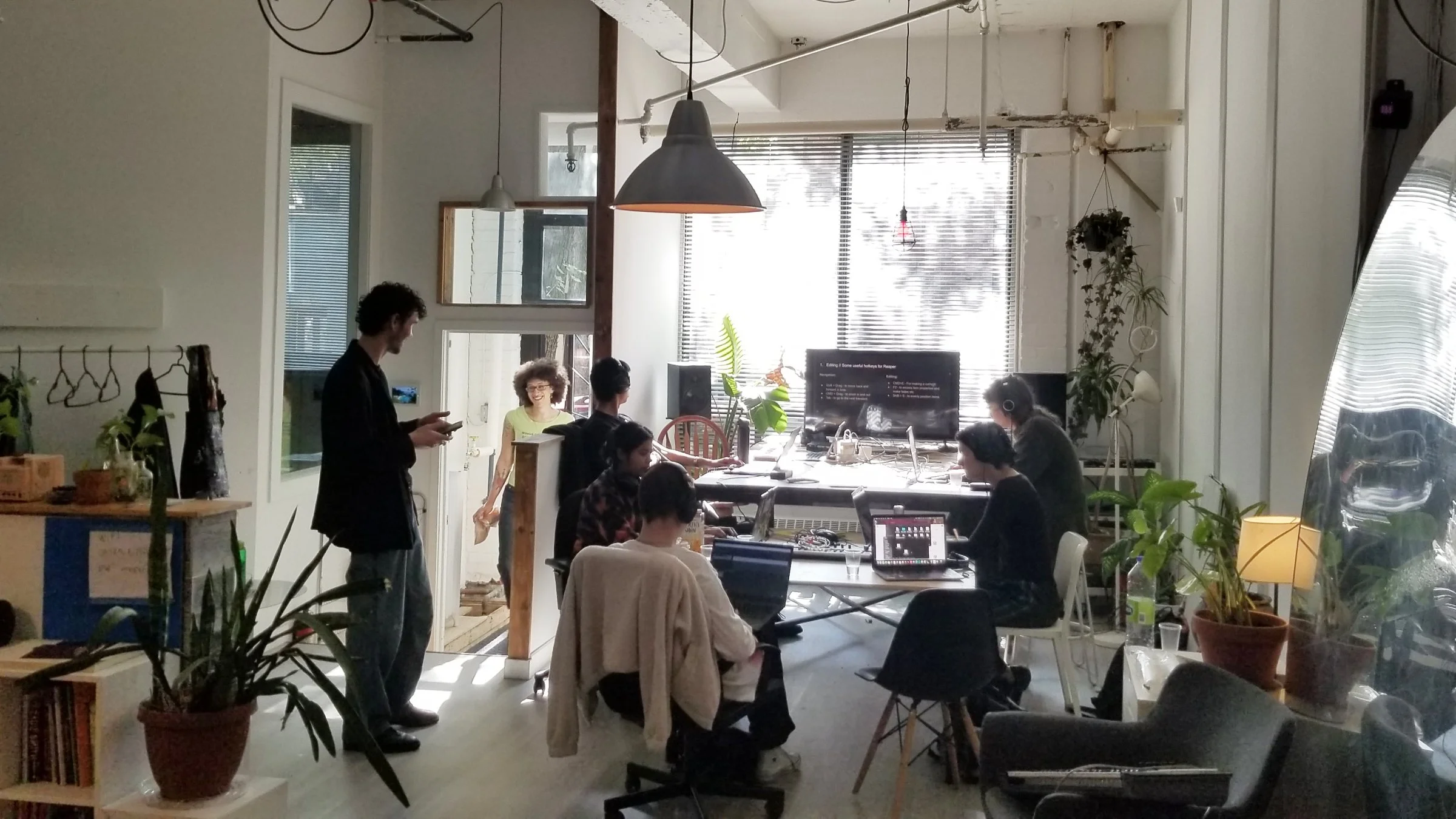
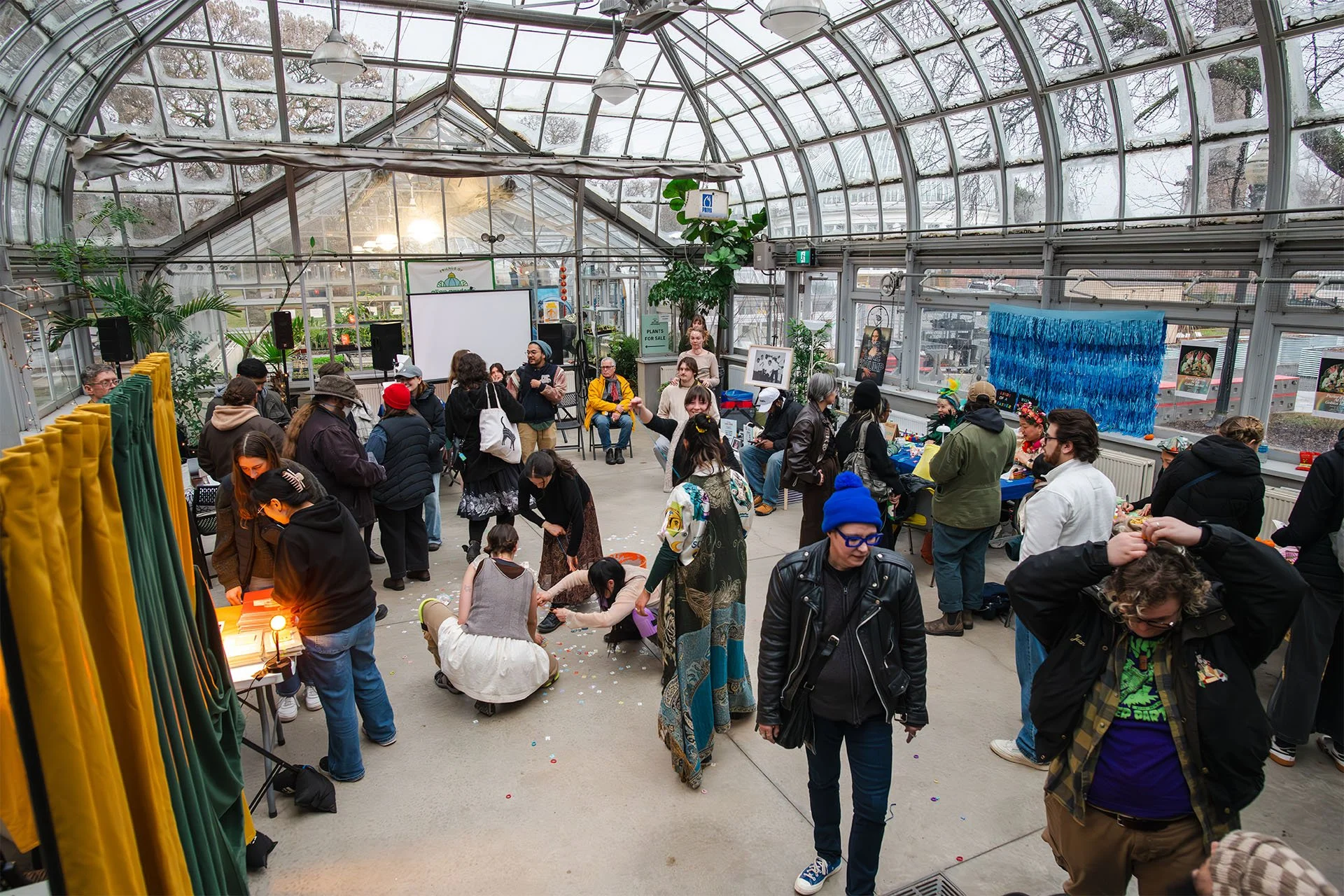
On March 28, we held our first in-person workshop, "Views from the Machine," with a group of people from diverse disciplinary backgrounds. Some had their work and employment connected to AI, while others were curious about how AI impacts their lives. All wanted a greater sense of individual and collective agency in navigating the rapid changes caused by its proliferation.
There’s a beginning and an end, or something like that. We begin the final session today aware of the ghostly presences who’ve made themselves known, who we’ve collected like paperclips to a magnet. Some parts of the internet are already dead, long cauterized stretches of digital space inhabited by bots and other unruly beings. Shadows, echoes, and duplicates dialogue between each other and with us. Reverberations of a long-decimated civilization. I wonder, how much noise will be there after we’re gone? Will we leave this place with the television running? With an old voicemail playing over and over into the void? What will it say?
Open Call / Residencies
Open call
Actually, no. No open call
Normally, we would launch an open call, but with being understaffed and facing serious budget cuts, it will be a bit of a gamble this time. The idea is simple: join the list of artists willing to collaborate, share resources, and work together. This list will be visible to the public, so once it’s published, artists, creatives, and cultural workers in Halifax can see your entries and understand what you’re looking for in a collaboration. Be honest, be open to new ways of working, and be a generous goblin.
Goblin Market consists of a 6-week artist-economy prototyping lab, access to CFAT’s facility and membership from May to June, a 2-day micro-festival, and a week-long exhibition open to the public in late June. We will select six artists from the list to participate in this program by lottery. We want to be surprised, and we understand there are always risks involved.
Cultural Technologies Lab
The Cultural Technologies Lab is where we at UKAI test many ideas—some large, and some tiny. We run virtual and in-person meetups featuring people and ideas that centre cultural production as vital mechanisms for social change.
July 2026 / New Stadium - Toronto, Canada
Most online collaboration still runs through platforms. Your work lives on someone else's server, your connection depends on their uptime, and the terms of your creative relationship are set by a company with different priorities than yours.
Digital Bridges teaches a different approach.
Over four weeks, a cohort of artists, creative technologists, and researchers learn to connect their tools directly to each other's systems — your data traveling between machines, not through a platform — and build a collaborative project using that connection. The program closes with a public showcase at New Stadium in Toronto.
What You'll Learn
The core skill is peer-to-peer networking using OSC (Open Sound Control), a communication protocol built into almost every major creative software platform: TouchDesigner, Max MSP, Ableton Live, Processing, p5.js, Unreal Engine, and beyond. Combined with Tailscale, a tool for creating direct encrypted connections between devices over the internet, OSC becomes a bridge for real-time data exchange between any two systems, anywhere, without routing through a third-party platform.
But beyond the technical setup, Digital Bridges asks you to think about designing a communication protocol as a creative act. What data do you share? What do you withhold? What does latency do to the work? These aren't just engineering questions, they're the same questions that shape any collaborative creative relationship.
By the end of the program you'll be able to link any two OSC-compatible systems in real time, across any distance.
Program Structure
Digital Bridges runs across four weeks in July, with one longer in-person session per week at New Stadium and one shorter online session per week. The online sessions aren't a concession to convenience. Demonstrating that meaningful collaboration happens across distance is part of what the program teaches.
Week 1 - Foundations: How Do We Connect? The first week is about setup, first contact, and community mapping. Participants establish working connections between their systems and begin identifying collaborators within the cohort. The week closes with a Creative Handshake exercise: design a simple interactive "hello" between your tools. Everyone leaves with a working connection and at least one collaborative relationship started.
Week 2 - Dialogue: Making Systems Talk Moving from a working connection to actual creative communication. A Distance Duet challenge pairs participants to build a synchronized audiovisual piece: one controls visuals, one controls audio, systems talk in real time. An online check-in surfaces what creative decisions emerged from the constraints of the technology.
Week 3 - Collaboration: Building Something Together Open-ended collaborative creation time with structured support. Participants define a project with their partner — a synchronized audiovisual piece, a shared interactive installation, a networked performance or data experience — and build it in a facilitated work session. A challenge prompt is available for those who want a more directed starting point.
Week 4 - Showcase and Future Visioning A closing in-person showcase of completed works, works in progress, and documented experiments. No minimum polish requirement. The goal is a specific moment to share and reflect, not a finished product standard. A structured closing discussion addresses building collaborative relationships and care networks that outlast the program.
Who It's For
Creative and technology professionals in organizational contexts looking for applied professional development with genuine technical depth. The program structure supports expense reimbursement, and outcomes — real-time systems fluency, protocol design thinking, cross-disciplinary collaboration practice — are directly transferable to professional work.
Researchers and science communicators working in public engagement, data visualization, or interactive outreach. The OSC and real-time data layer maps naturally onto sensor networks and data pipelines, reoriented toward experiential and public-facing output. Target institutions include science centres, museums, and university programs with public engagement requirements.
Artists and arts workers exploring new tools for collaborative practice, distance performance, or networked installation.
The cohort is deliberately mixed across these disciplines. The different problem-solving approaches participants bring to the same technical challenge is part of the program's value.
Prerequisites: Basic familiarity with at least one creative software platform. Comfort installing software and troubleshooting. No networking or programming experience required. Openness to technical experimentation essential.
What You Leave With
Working knowledge of Tailscale and OSC
The ability to connect any OSC-compatible creative or technical software in real time across distance
At least one completed or documented collaborative project
Participation in a public showcase event
An expanded professional network across art, technology, and science disciplines
Transferable skills: real-time systems thinking, protocol design, cross-disciplinary collaboration practice
Program Details
In-person sessions at New Stadium, 83 Walnut Ave, Toronto (6–9pm): July 1, July 8, July 22
Closing showcase at New Stadium (4:30–9:30pm): July 25
Online check-in sessions (1–2:15pm): July 4, 11, 18 - (6-7:15pm): July 15
Cohort size: 16 participants maximum
Participant requirements: A computer running Windows, macOS, or Linux with WiFi and a power adapter. Bring your digital creative tools, data, ideas, and an open mind.
The $750 tier is subsidized for self employed artists. If cost is a barrier, get in touch: immersive@ukaiprojects.com