
Views from the Machine | Workshop Digest
A playful interpretation of how we can reclaim our attention, foster agency, and recognize that what the machine “sees” often extends beyond the picture presented to “it.”
Developed and facilitated by Benjamin Lappalainen & Luisa Ji
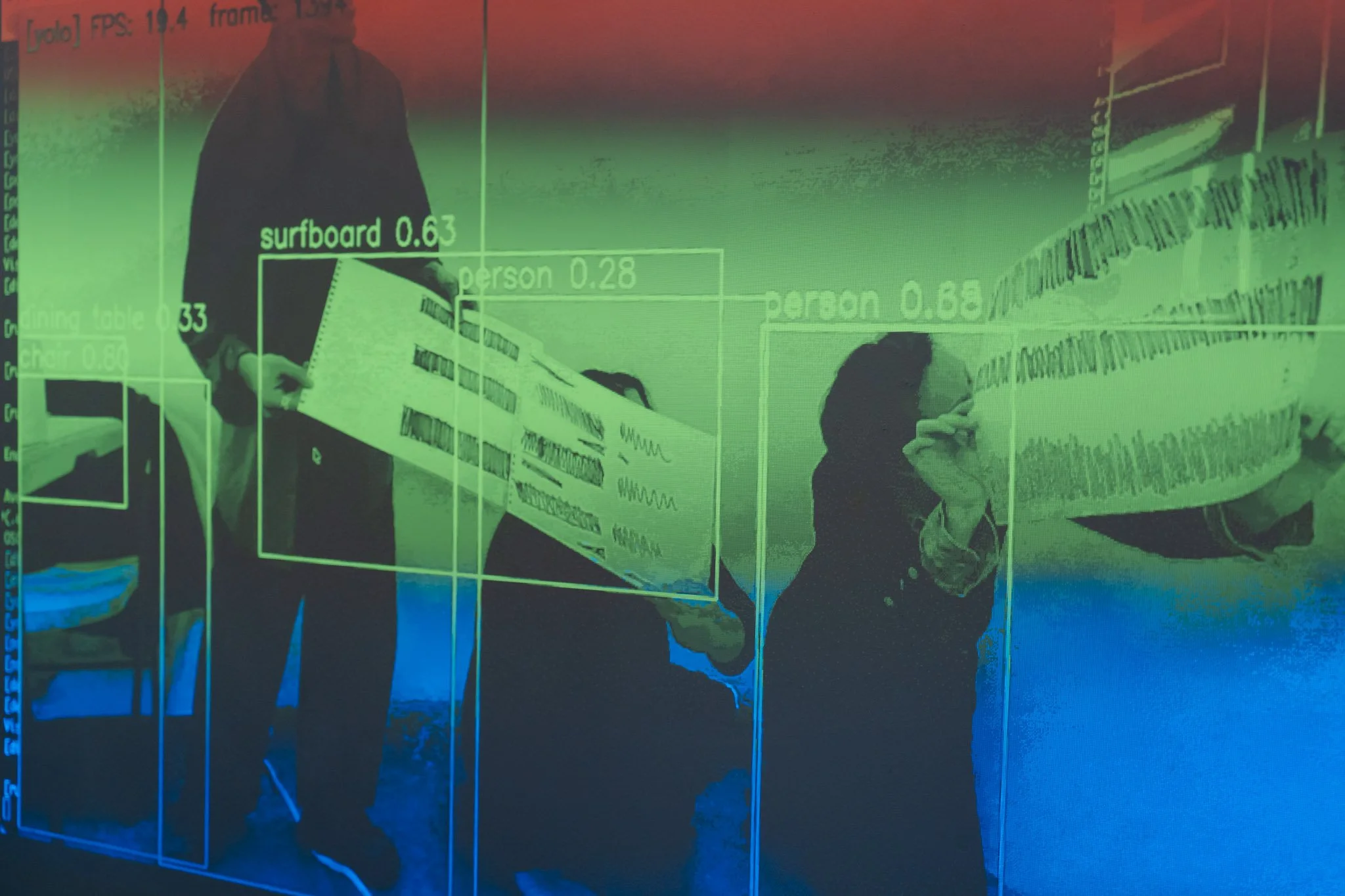
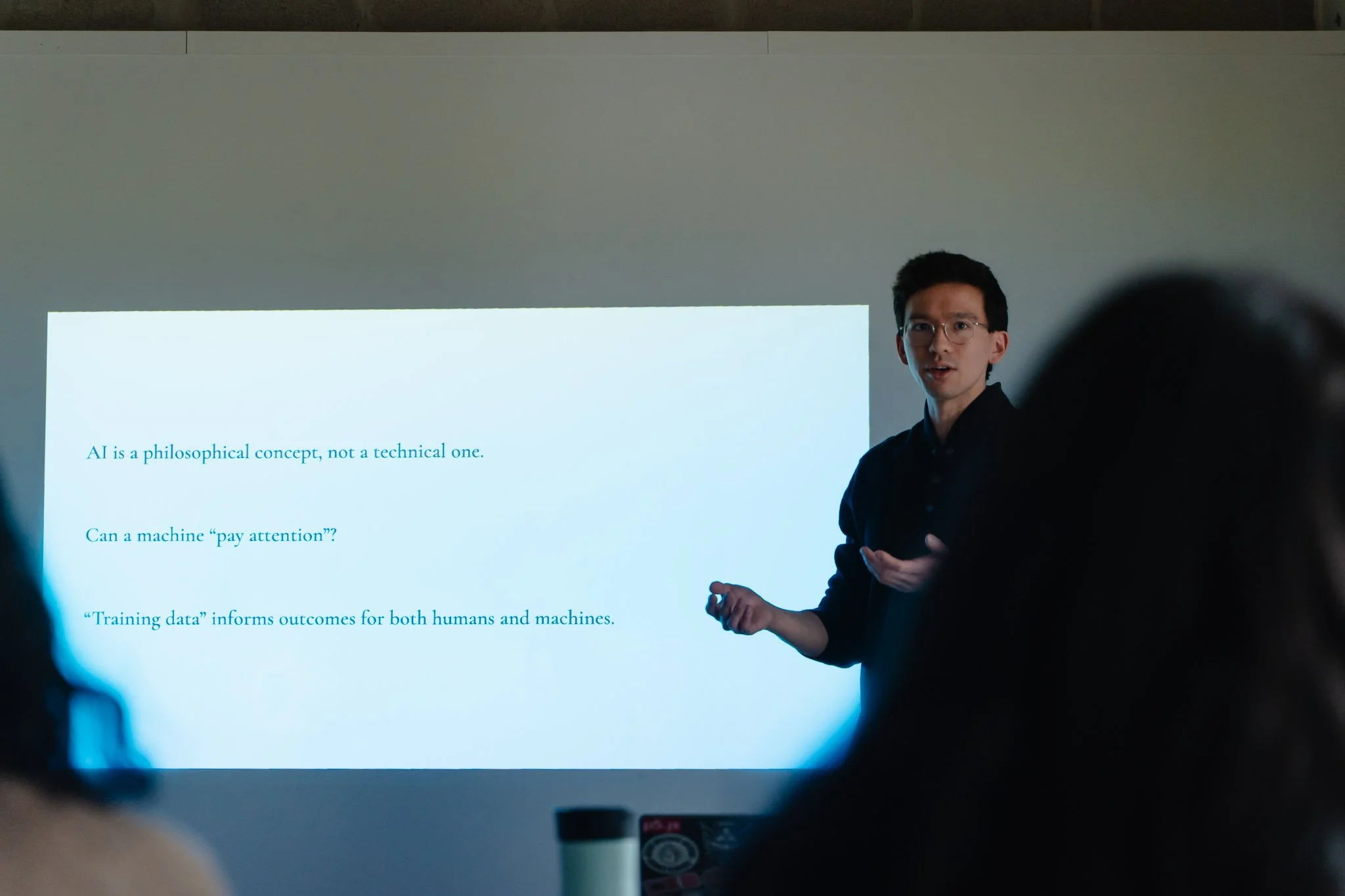
When we speak of AI, we tend to relate the term to a broad philosophical concept. In many cases, we refer to them by their brand names: ChatGPT, Gemini, Copilot, Claude, etc. When we describe AI, we often use language that humans can relate to. Attention is one of them.
In 2017, researchers at Google co-authored “Attention is All You Need,” a paper that introduced the transformer, a machine learning architecture that rapidly accelerated the mainstream applications of machine learning. The “GPT” in ChatGPT stands for Generative Pre-trained Transformer. Today, the familiar brand-name AI products built on this architecture are capable of complex, multi-step reasoning and of processing and generating text, images, audio, and video in mere seconds.
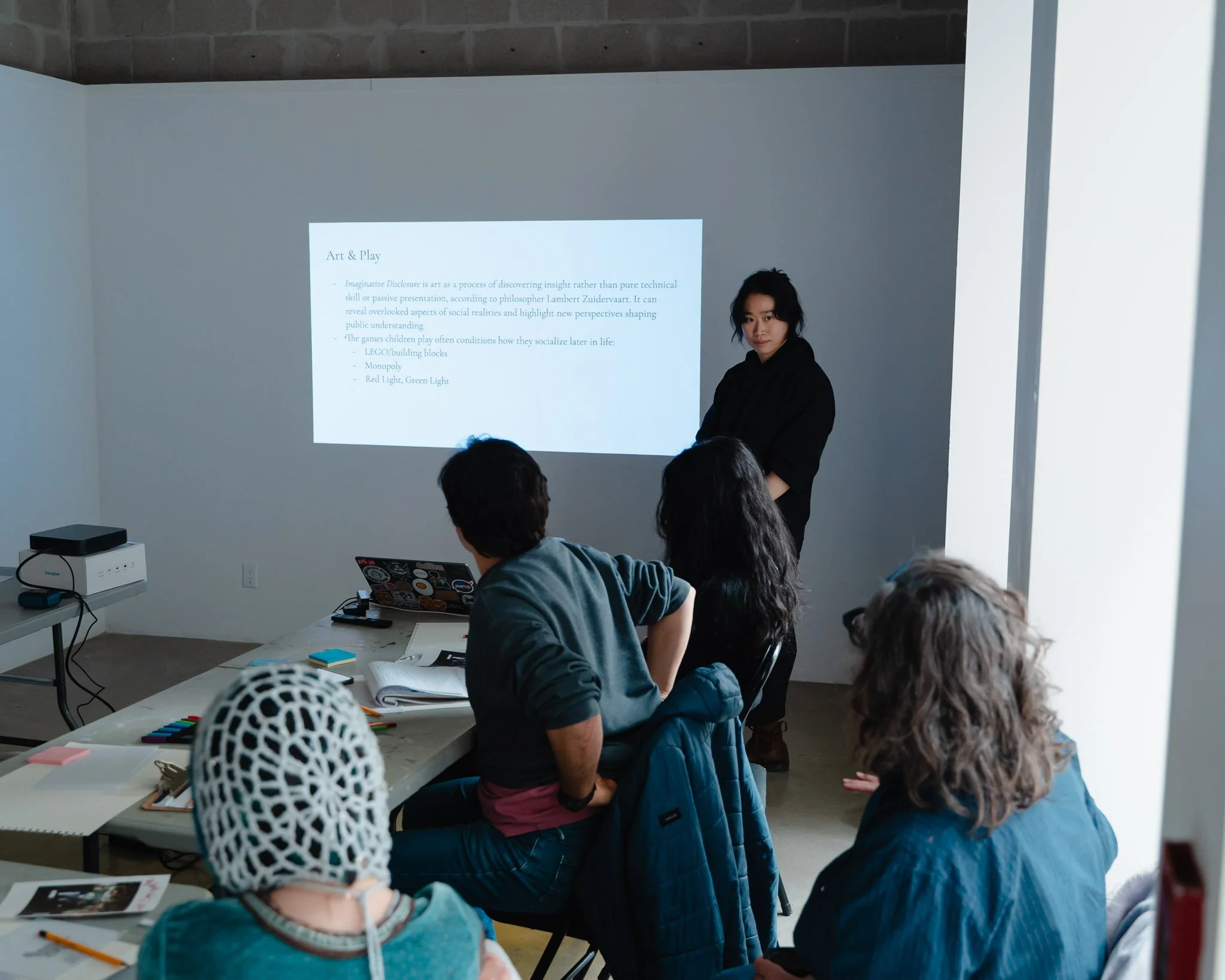
Human attention
When you meet someone for the first time, what catches your attention?
There is no beginning or end to this process of “paying attention” — we continually try to make sense of our context. We take notes, make quick sketches, use verbal cues, and mark other psychological landmarks, sometimes with our phones’ cameras, to capture what we focus on daily.
Attention is a skill that can be learned and developed, and it is just as easily hacked, overloaded, or misdirected.
Machine attention
How machines “see” the world is often heavily anthropomorphized. The assumption that what a vision model processes is similar to human ocular processing creates a gap in comprehending how machine vision technologies are integrated into other systems — systems that can be technological and automated, or cultural, political, and social.
Views from the Machine highlights a brief selection of tools, each with specific use cases, to help participants better understand the implications of each “AI.” We explored examples from a self-supervised vision transformer, purpose-specific detection models, and a visual language model to bring everything together.
Indexing AI
AI is littered everywhere. It is presented to us as a monolith, with its own mythological qualities.
Along with the opportunity to peek at a handful of machine vision tools, we encouraged indexing them — tools that would otherwise be communicated as simply “AI,” even though their use cases carry specific real-life implications.
What is its purpose?
Who and what can it help?
In what ways could it be misused?
What are some of its alternatives?
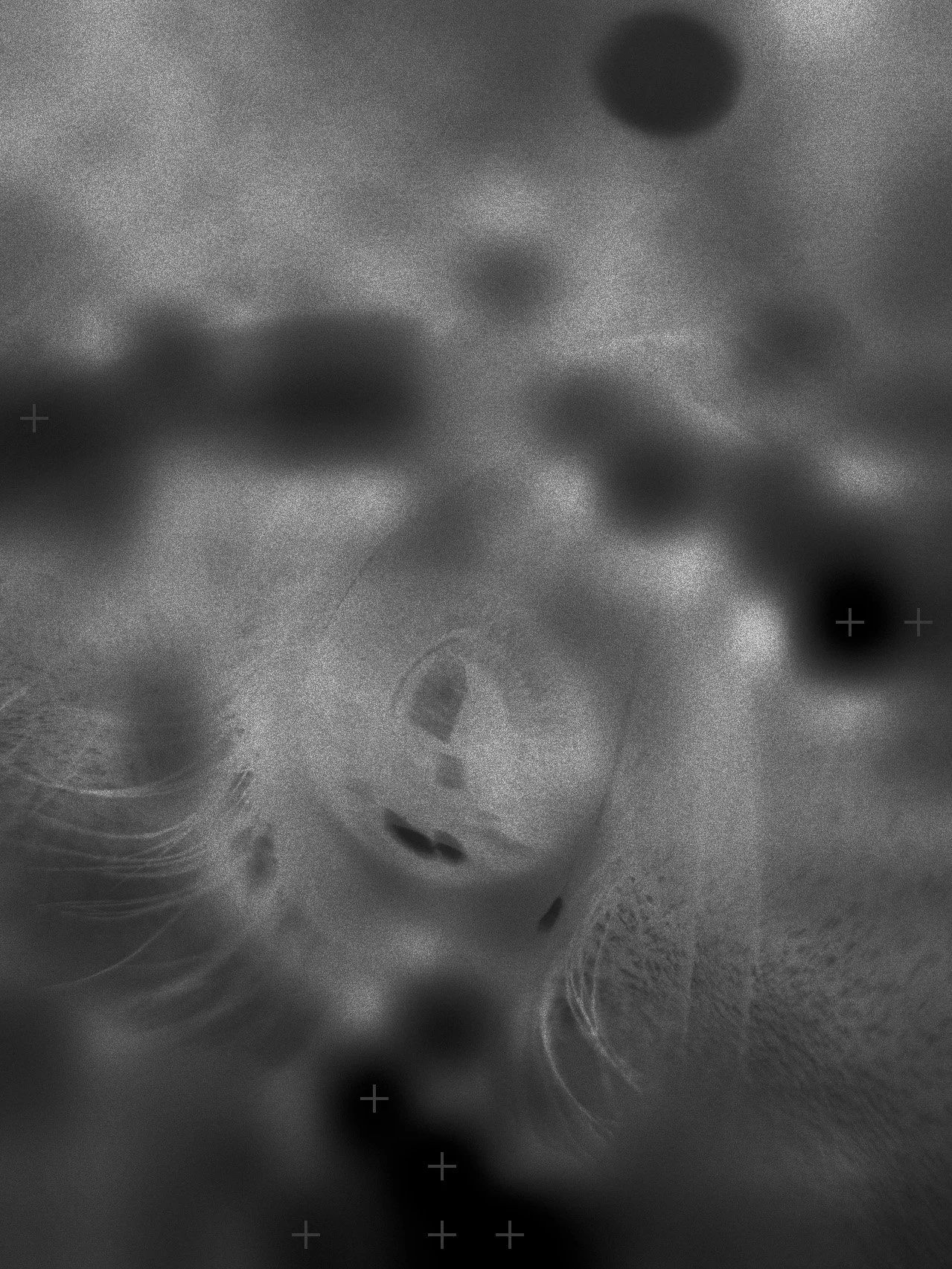
Art and the Art of (not) Being Seen
UKAI Projects is run by artists. We each have our own practices and methods of making sense of the world. Where we converge is that art is a place where we learn about rules, bend them, and make our own.
When AI is sold to us through its speed and efficiency in “generating art,” art as a spectacle to be consumed or pure technical excellence becomes less relevant. Art, as a conduit for agency, relationship-building, and attention, creates new possibilities for how we want to live in an AI-saturated world.
We asked participants to think of a game we could play while being “watched” by one of the models we tested, and to specify the conditions for winning. With simple rules, we jumped into action to play the game of how not to be a person.
Views from the Machine is a playful interpretation of how we can reclaim our attention, foster agency, and recognize that what the machine “sees” often extends beyond the picture presented to “it.”
Work with us
At UKAI Projects, we turn abstract ideas into engaging experiences. When it comes to challenging topics like AI, we work from both technical and philosophical aspects to untangle the messy reality of AI adoption and implementation in cultural work.
Our program participants walk away with:
A personal framework for engaging critically and creatively with digital technologies
Clarity in articulating their own values and perspectives on algorithmic systems
Message UKAI Projects to collaborate with us on experiences tailored to the challenges you face — workplace culture, innovation, public life, tech education, and more. You can also select from our previous projects and learning programs to apply in new contexts.


July 2026 / New Stadium - Toronto, Canada
Most online collaboration still runs through platforms. Your work lives on someone else's server, your connection depends on their uptime, and the terms of your creative relationship are set by a company with different priorities than yours.
Digital Bridges teaches a different approach.
Over four weeks, a cohort of artists, creative technologists, and researchers learn to connect their tools directly to each other's systems — your data traveling between machines, not through a platform — and build a collaborative project using that connection. The program closes with a public showcase at New Stadium in Toronto.
What You'll Learn
The core skill is peer-to-peer networking using OSC (Open Sound Control), a communication protocol built into almost every major creative software platform: TouchDesigner, Max MSP, Ableton Live, Processing, p5.js, Unreal Engine, and beyond. Combined with Tailscale, a tool for creating direct encrypted connections between devices over the internet, OSC becomes a bridge for real-time data exchange between any two systems, anywhere, without routing through a third-party platform.
But beyond the technical setup, Digital Bridges asks you to think about designing a communication protocol as a creative act. What data do you share? What do you withhold? What does latency do to the work? These aren't just engineering questions, they're the same questions that shape any collaborative creative relationship.
By the end of the program you'll be able to link any two OSC-compatible systems in real time, across any distance.
Program Structure
Digital Bridges runs across four weeks in July, with one longer in-person session per week at New Stadium and one shorter online session per week. The online sessions aren't a concession to convenience. Demonstrating that meaningful collaboration happens across distance is part of what the program teaches.
Week 1 - Foundations: How Do We Connect? The first week is about setup, first contact, and community mapping. Participants establish working connections between their systems and begin identifying collaborators within the cohort. The week closes with a Creative Handshake exercise: design a simple interactive "hello" between your tools. Everyone leaves with a working connection and at least one collaborative relationship started.
Week 2 - Dialogue: Making Systems Talk Moving from a working connection to actual creative communication. A Distance Duet challenge pairs participants to build a synchronized audiovisual piece: one controls visuals, one controls audio, systems talk in real time. An online check-in surfaces what creative decisions emerged from the constraints of the technology.
Week 3 - Collaboration: Building Something Together Open-ended collaborative creation time with structured support. Participants define a project with their partner — a synchronized audiovisual piece, a shared interactive installation, a networked performance or data experience — and build it in a facilitated work session. A challenge prompt is available for those who want a more directed starting point.
Week 4 - Showcase and Future Visioning A closing in-person showcase of completed works, works in progress, and documented experiments. No minimum polish requirement. The goal is a specific moment to share and reflect, not a finished product standard. A structured closing discussion addresses building collaborative relationships and care networks that outlast the program.
Who It's For
Creative and technology professionals in organizational contexts looking for applied professional development with genuine technical depth. The program structure supports expense reimbursement, and outcomes — real-time systems fluency, protocol design thinking, cross-disciplinary collaboration practice — are directly transferable to professional work.
Researchers and science communicators working in public engagement, data visualization, or interactive outreach. The OSC and real-time data layer maps naturally onto sensor networks and data pipelines, reoriented toward experiential and public-facing output. Target institutions include science centres, museums, and university programs with public engagement requirements.
Artists and arts workers exploring new tools for collaborative practice, distance performance, or networked installation.
The cohort is deliberately mixed across these disciplines. The different problem-solving approaches participants bring to the same technical challenge is part of the program's value.
Prerequisites: Basic familiarity with at least one creative software platform. Comfort installing software and troubleshooting. No networking or programming experience required. Openness to technical experimentation essential.
What You Leave With
Working knowledge of Tailscale and OSC
The ability to connect any OSC-compatible creative or technical software in real time across distance
At least one completed or documented collaborative project
Participation in a public showcase event
An expanded professional network across art, technology, and science disciplines
Transferable skills: real-time systems thinking, protocol design, cross-disciplinary collaboration practice
Program Details
In-person sessions at New Stadium, 83 Walnut Ave, Toronto (6–9pm): July 1, July 8, July 22
Closing showcase at New Stadium (4:30–9:30pm): July 25
Online check-in sessions (1–2:15pm): July 4, 11, 18 - (6-7:15pm): July 15
Cohort size: 16 participants maximum
Participant requirements: A computer running Windows, macOS, or Linux with WiFi and a power adapter. Bring your digital creative tools, data, ideas, and an open mind.
The $750 tier is subsidized for self employed artists. If cost is a barrier, get in touch: immersive@ukaiprojects.com